
Mitt, a tiny 200b functional event emitter.
In this article, we will review mitt a functional event emitter. We will look at:
-
What is Mitt?
-
Mitt usage in nuqs codebase.
What is Mitt?
Mitt is a tiny 200 bytes functional event emitter. So what are its features?
-
Microscopic: weighs less than 200 bytes gzipped.
-
Useful: a wildcard
"*"event type listens to all events. -
Familiar: same names & ideas as Node’s EventEmitter.
-
Functional: methods don’t rely on
this. -
Great Name: somehow mitt wasn’t taken.
Install:
This is how you can install mitt.
$ npm install --save mitt
Usage:
import mitt from 'mitt'

const emitter = mitt()

// listen to an event
emitter.on('foo', e => console.log('foo', e) )

// listen to all events
emitter.on('*', (type, e) => console.log(type, e) )

// fire an event
emitter.emit('foo', { a: 'b' })

// clearing all events
emitter.all.clear()

// working with handler references:
function onFoo() {}
emitter.on('foo', onFoo)   // listen
emitter.off('foo', onFoo)  // unlisten
This code snippet is picked from usage in the mitt documentation.
Mitt usage in nuqs codebase.
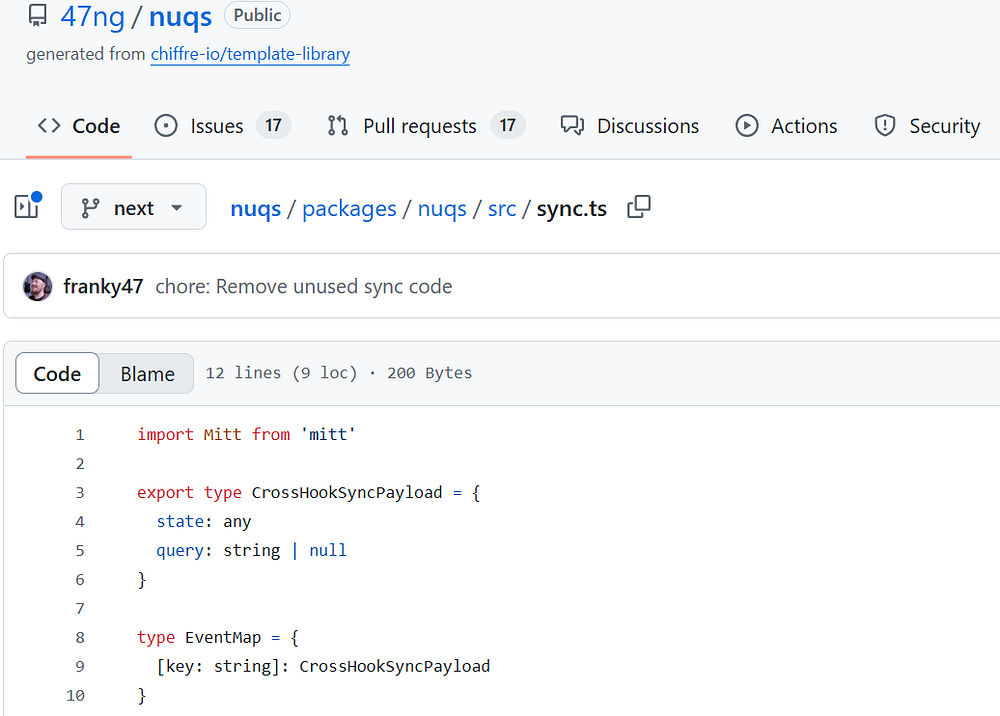
I found mitt imported in a file named sync.ts in nuqs package.
import Mitt from 'mitt'

export type CrossHookSyncPayload = {
  state: any
  query: string | null
}

type EventMap = {
  [key: string]: CrossHookSyncPayload
}

export const emitter = Mitt<EventMap>()
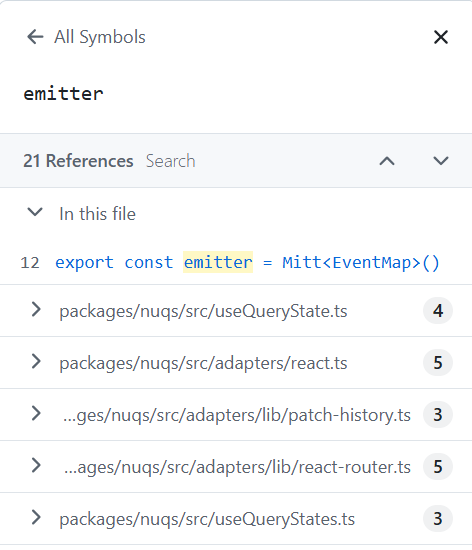
emitter is used in a lot of places as you can see from the symbols:
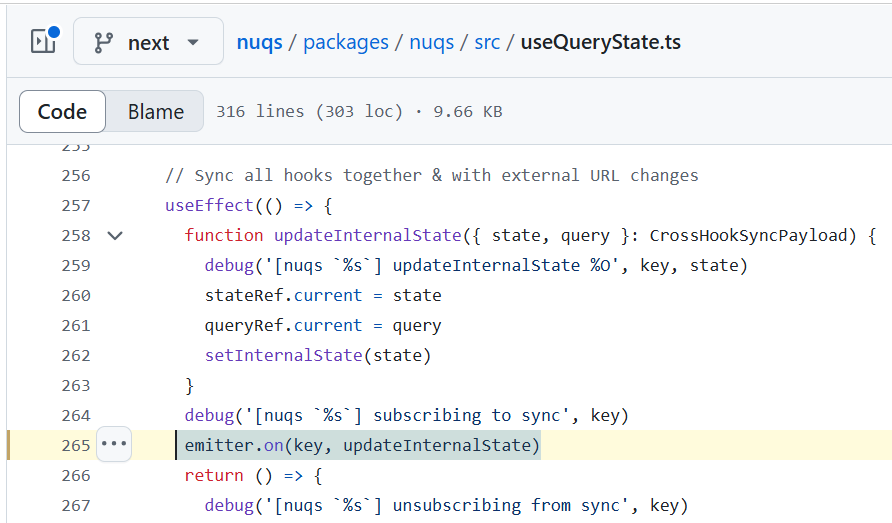
we will pick an example from useQueryState.ts at line 265, emitter.on is called
emitter.on(key, updateInternalState)
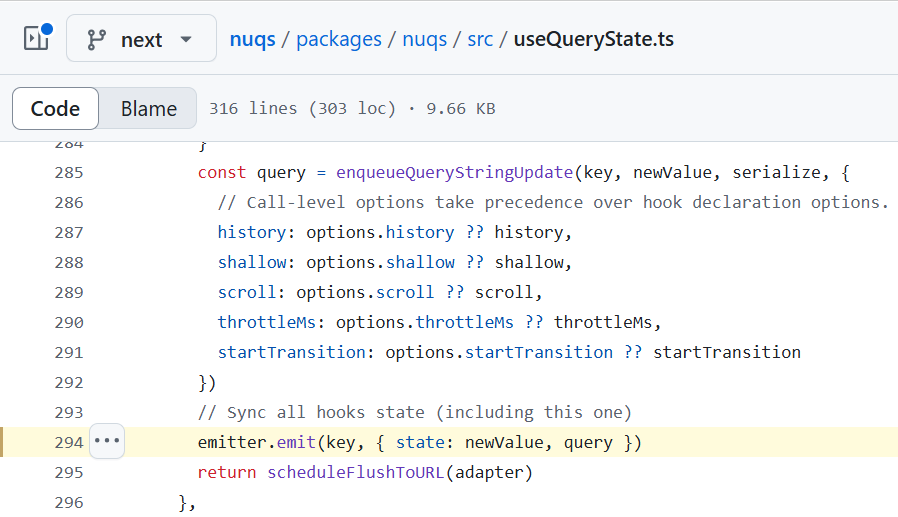
In the same file, emitter.emit is called at line 294.
// Sync all hooks state (including this one)
emitter.emit(key, { state: newValue, query })
At line 268, you can see that emitter.off is called
emitter.off(key, updateInternalState)
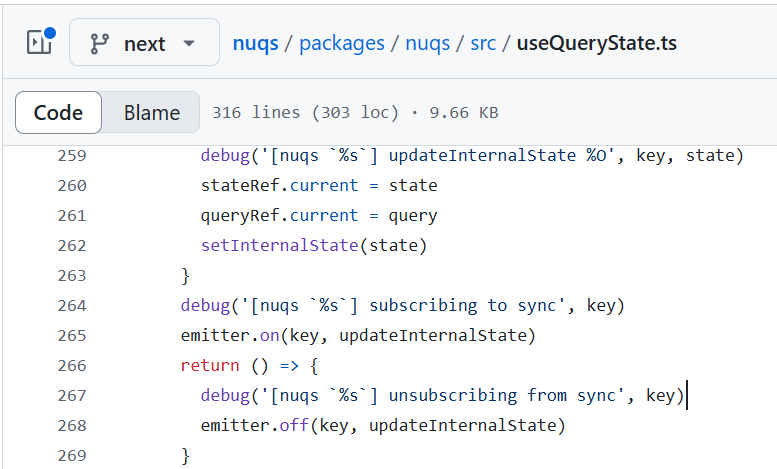
Overall, in the useQueryState.ts file, emitter.on, emitter.off and emitter.emit, these three API’s from the mitt are used.
About me:
Hey, my name is Ramu Narasinga. Email: ramu.narasinga@gmail.com
Tired of AI-generated code that works but nobody understands?
I spent 3+ years studying OSS codebases and wrote 350+ articles on what makes them production-grade. I built an open source tool that reviews your PR against your existing codebase patterns.
Your codebase. Your patterns. Enforced.