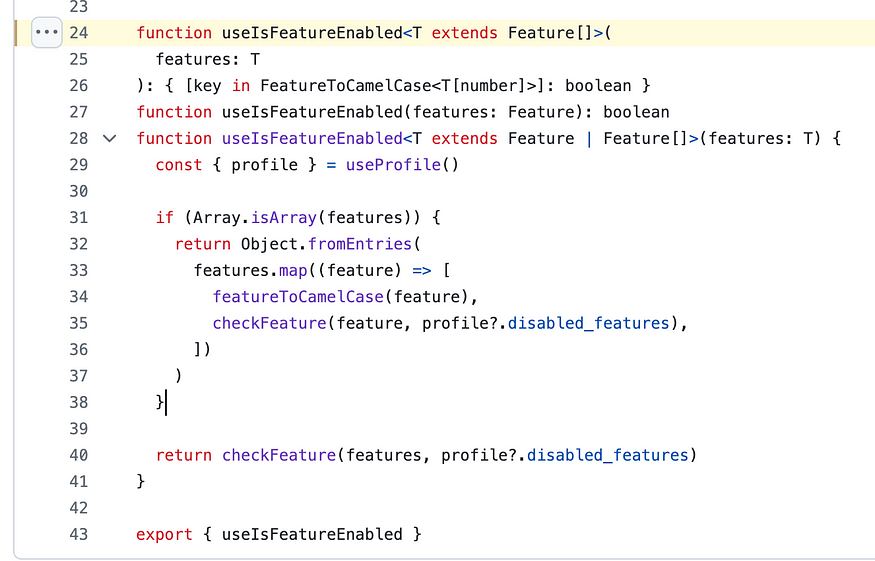
When working with TypeScript, you may encounter situations where a function needs to handle different types of input while maintaining type safety. This is where function overloading comes into play. Let’s look at a practical example of function overloading, inspired by a code snippet from the Supabase source code.
The useIsFeatureEnabled function is a great example of function overloading. It can handle both an array of features and a single feature, returning appropriate results for each case.
Function Overloads: The first two declarations are overload signatures. They define the different ways the function can be called. The actual implementation comes last, handling both cases.
Implementation: The function implementation checks if the input features is an array. If it is, it processes each feature, converts it to camelCase, and checks if it's enabled. If features is a single feature, it directly checks its status.
Function overloading in TypeScript allows you to define multiple ways to call a function with different types of input while ensuring type safety. The useIsFeatureEnabled function from Supabase is an excellent example of this concept in action. It demonstrates how to handle different input types seamlessly, providing both flexibility and strong typing.
Hey, my name is Ramu Narasinga. I study large open-source projects and create content about their codebase architecture and best practices, sharing it through articles, videos.