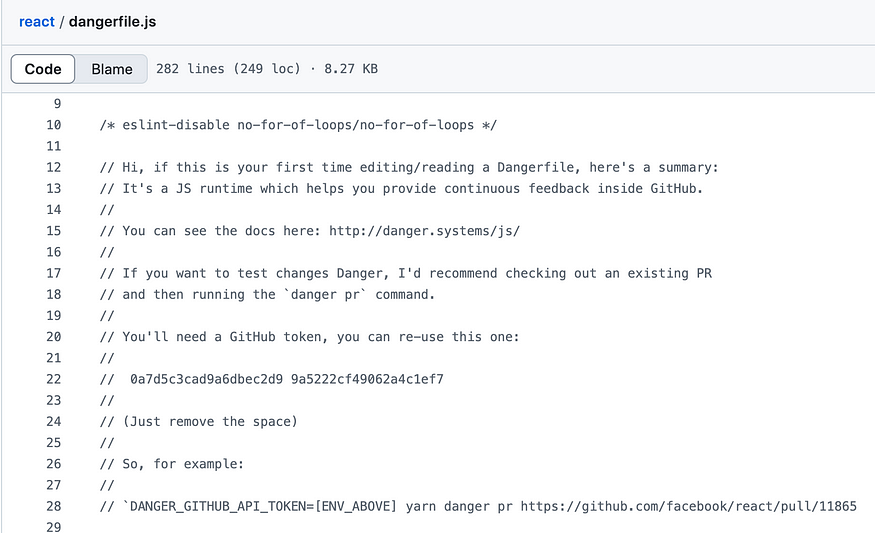
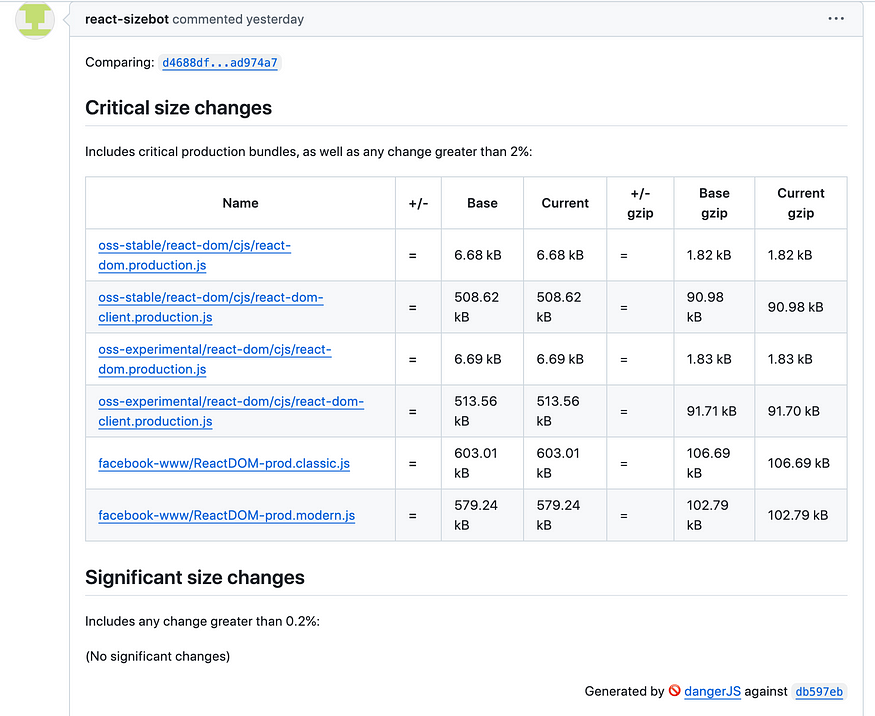
Danger runs during your CI process, and gives your team the chance to automate common code review chores such as enforcing changelogs, encouraging smaller PRs, show useful info on a PR.
This provides another logical step in your build, through this Danger can help lint your rote tasks in daily code review.
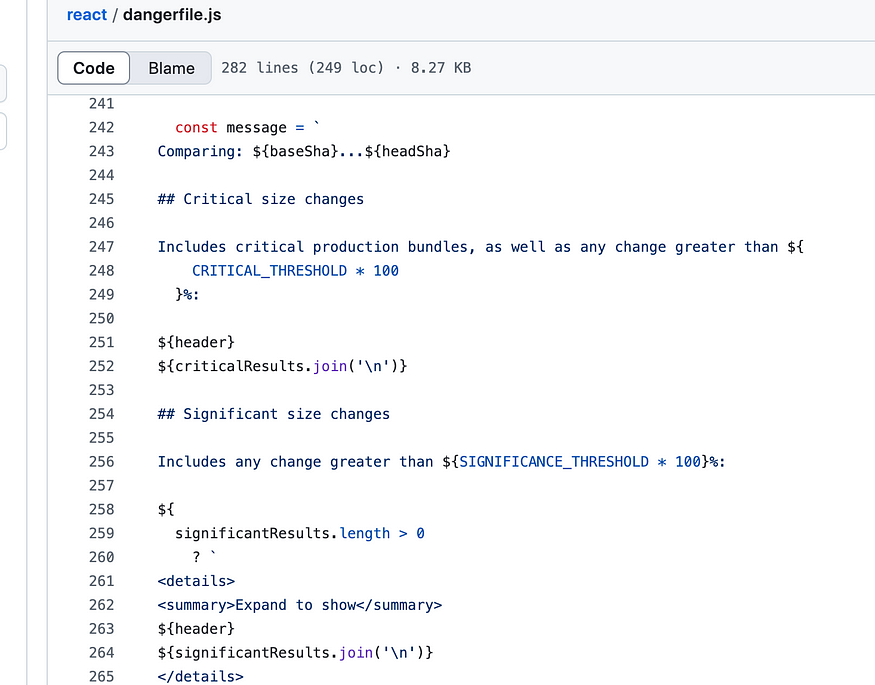
Danger leaves messages inside your PRs based on rules that you create with JavaScript or TypeScript.
Over time, as rules are adhered to, the message is amended to reflect the current state of the code review.
This import is found at the top of the file. Let’s find out what these functions are and how they are used in react/dangerfile.js.
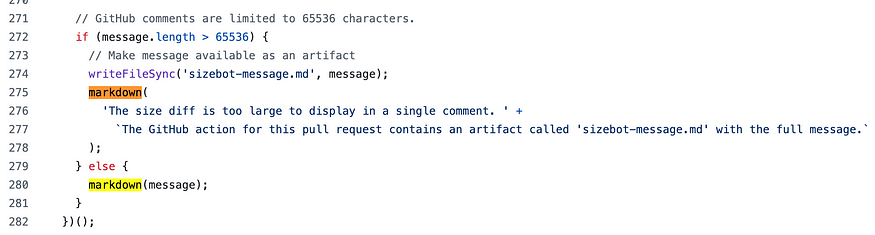
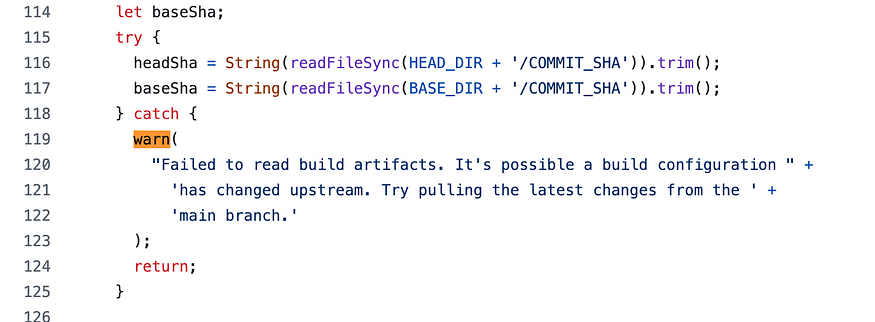
markdown and warn, these are the functions which you use in rules to provide feedback during code review. Assuming Danger has access to write a comment, then warnand markdown will report directly inline.
// Adds raw markdown into the Danger comment, under the tablemarkdown(message: MarkdownString, file?: string, line?: number) => void// Highlights low-priority issues, but does not fail the build. Message is shown inside a HTML table.warn(message: MarkdownString, file?: string, line?: number) => void
markdown is used at the end of the file
warn is found to be used in catch block
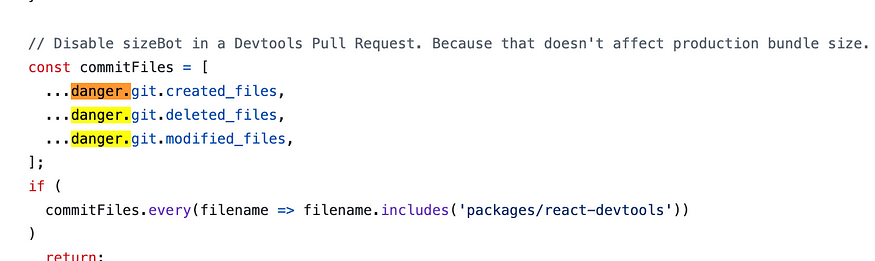
danger is further used in 5 places and below is its usecase:
// Details specific to the git changes within the code changes. Currently, this is just the raw file paths that have been added, removed or modified.danger.git: GitDSL
Hey, my name is Ramu Narasinga. I study large open-source projects and create content about their codebase architecture and best practices, sharing it through articles, videos.