The Object.assign() static method copies all enumerableown properties from one or more source objects to a target object. It returns the modified target object.
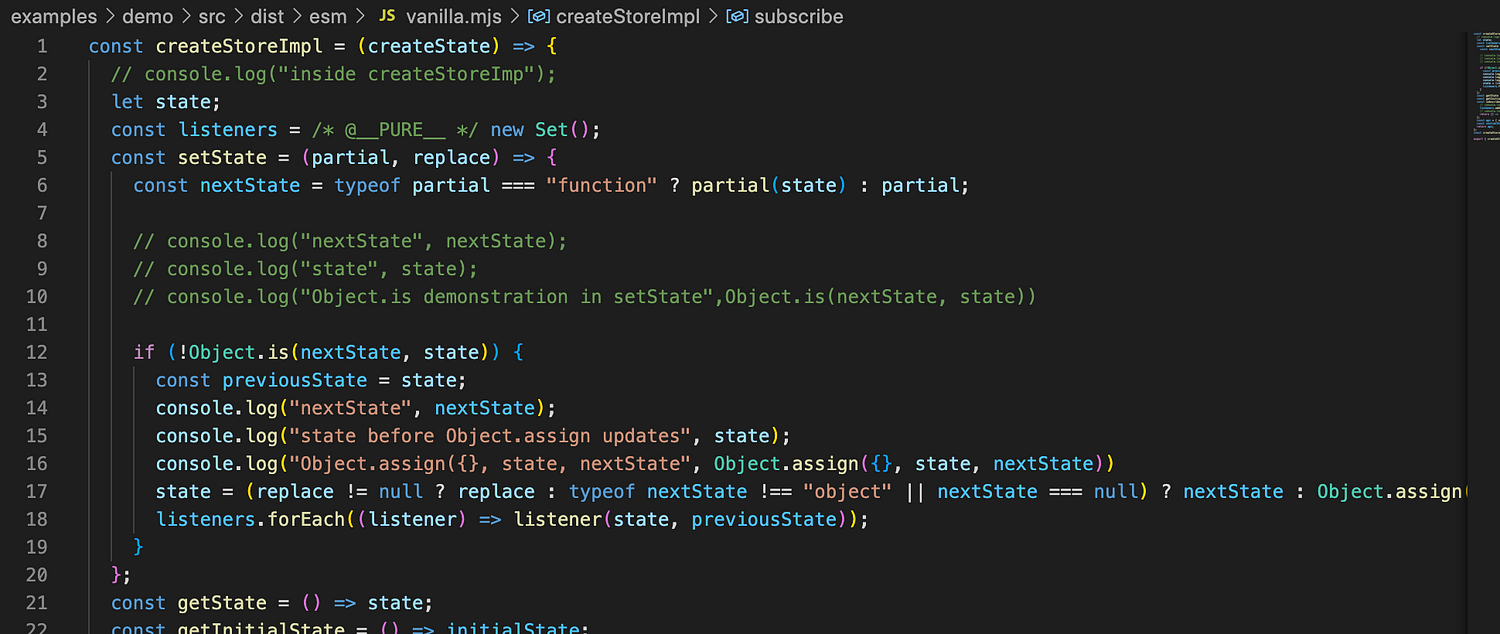
That’s nested ternary operator there in the above code snippet. if the replace is not null, state will be replace or if the nextState is not an object, just return nextState as is but what we are interested in is Object.assign({}, state, newState).
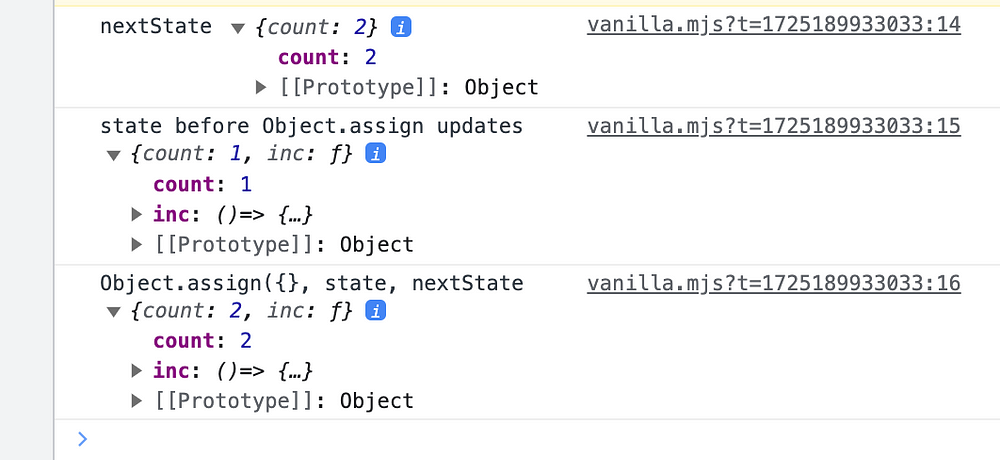
Let’s first log and see what is in state and nextState when you update your state. The example I picked is from demo example in Zustand’s source code. I modified the code a bit so we can put some console statements and run these experiments.
In this simple example, when the count is incremented, it comes down to updating the state object using Object.assign.
Next time, you are trying to perform some updates on your JSON object, use the Object.assign.
Hey, my name is Ramu Narasinga. I study large open-source projects and create content about their codebase architecture and best practices, sharing it through articles, videos.