These are descriptive and explain the kind of error being handled, for example, MISSING_DIR_OR_EMPTY_PROJECT is likely used in a scenario where there is missing directory or empty project.
Is there any special meaning to these variable values? they are just numbers assigned as strings. It makes more sense once we understand how these variables are used.
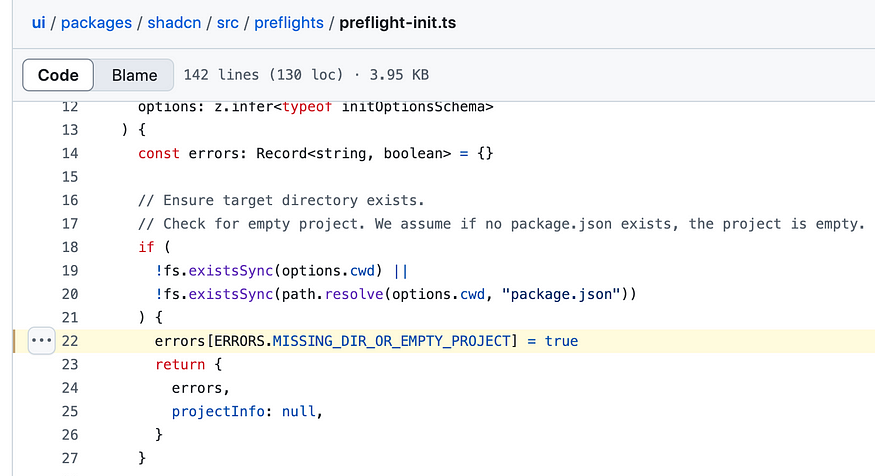
If you open this preflight-init.ts, you will find the below code snippet in there.
// Ensure target directory exists.
 // Check for empty project. We assume if no package.json exists, the project is empty.
 if (
   !fs.existsSync(options.cwd) ||
   !fs.existsSync(path.resolve(options.cwd, "package.json"))
 ) {
   errors[ERRORS.MISSING_DIR_OR_EMPTY_PROJECT] = true
   return {
     errors,
     projectInfo: null,
   }
 }
Pay attention to this errors[ERRORS.MISSING_DIR_OR_EMPTY_PROJECT]=true, here errors is an object. What’s the value of MISSING_DIR_OR_EMPTY_PROJECT? it was “1” as explained earlier.
This mean errors object would look like below:
{ "1": true}
This is fine, but how’s this error object used and where? The answer is in init.ts.
if this check was something like preflight.error[“1”], your next thought immediately is what’s this mysterious value here. This means, these constants in error.ts are used to improve code readability
Hey, my name is Ramu Narasinga. I study large open-source projects and create content about their codebase architecture and best practices, sharing it through articles, videos.